
As Hurstville prepares to welcome 50,000 people for the Year of the Horse, streets and stories align in one of Sydney’s most grounded Lunar New Year celebrations.
Morning Light on Forest Road
Early on a February morning, Forest Road feels wider than usual. Shopfronts roll up their shutters with a practiced calm, the scent of roast duck and fresh bread escaping into the street. Paper lanterns sway lightly overhead, catching the first sun as if testing their balance. By mid-morning, the rhythm will change, but for now there is a pause – the kind that comes before a crowd gathers. This is Hurstville on the cusp of the Year of the Horse, readying itself for a day that folds history, migration, and everyday life into something briefly ceremonial.
The suburb has long been a meeting point – rail lines converging, cultures overlapping – and today that role is made visible. Families arrive early, some pushing prams, others walking slowly with grandparents in tow. Volunteers tape down cables, performers warm up quietly, and shopkeepers step outside to watch the street they know transform.
Hurstville and the Year of the Horse
By late morning, the Year of the Horse begins to assert its energy. Drums echo down Forest Road, deep and insistent, drawing people toward Hurstville Plaza where the opening ceremony unfolds. The Lion Dance moves with controlled ferocity, leaping and bowing, its performers briefly visible beneath silk and fur. Children edge closer, then retreat, half-frightened and half-delighted.
The Horse, in the lunar calendar, is often associated with motion and perseverance. In Hurstville, that symbolism feels apt. This is a place shaped by effort – by small businesses built over decades, by families who arrived with little more than recipes and determination. The festival does not explain this in words; it lets the setting speak.
Streets Turned Festival Ground
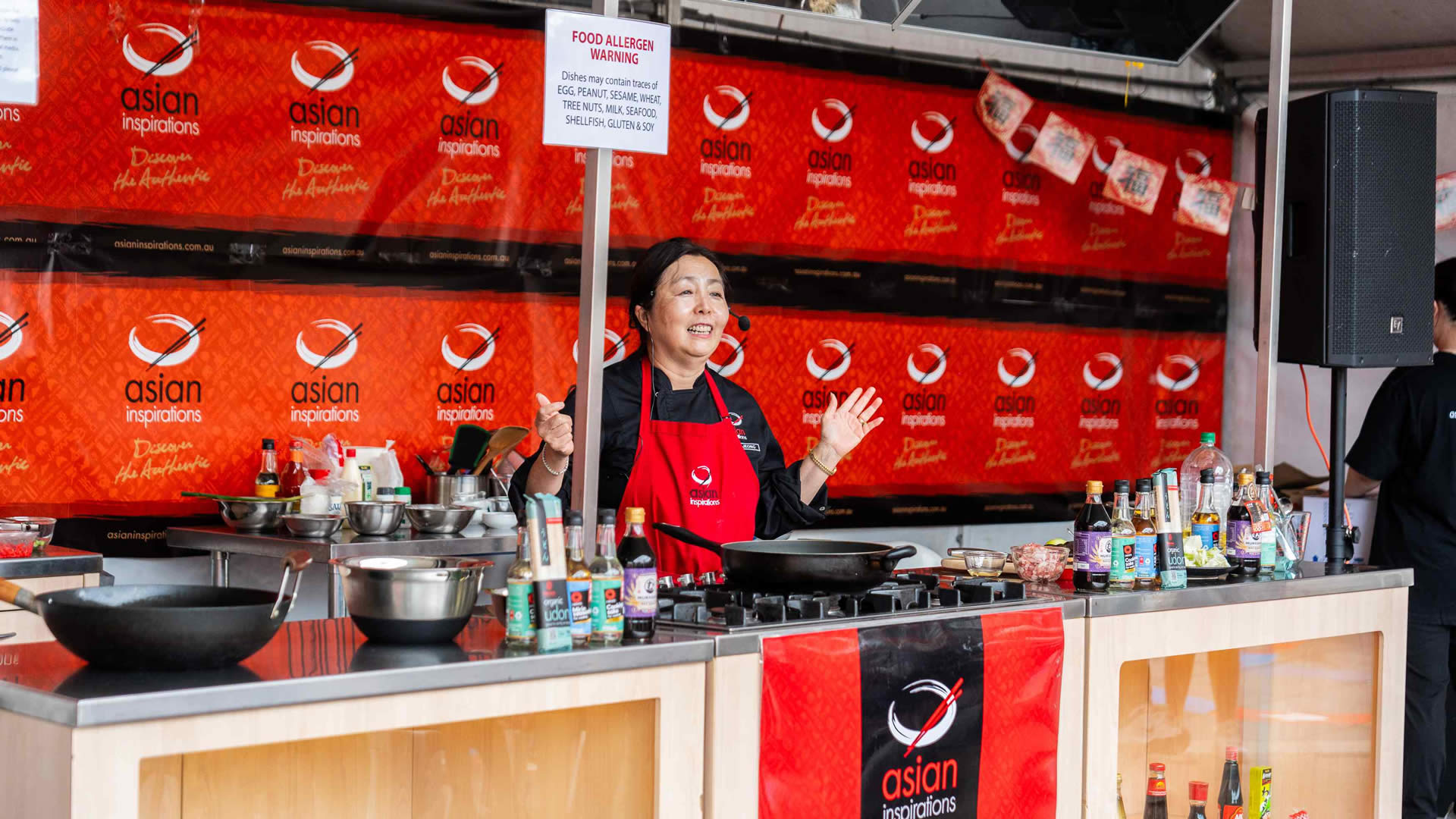
Forest Road and Hurstville Plaza slowly surrender to foot traffic. What is usually a thoroughfare becomes a shared space, edged by food stalls sending out steam and spice. Skewers sizzle, dumplings are folded with practiced speed, and sugar-coated hawthorn glints red in the sun. The air carries multiple languages, sometimes within the same sentence.
This is not spectacle for spectacle’s sake. The Year of the Horse celebration here feels lived-in, shaped by repetition. Now in its 23rd year, the festival has a familiarity that allows people to settle quickly into the day. Teenagers drift between stages, families linger over lunch, and elders find shaded seats where they can watch without hurry.
The Year of the Horse on Stage
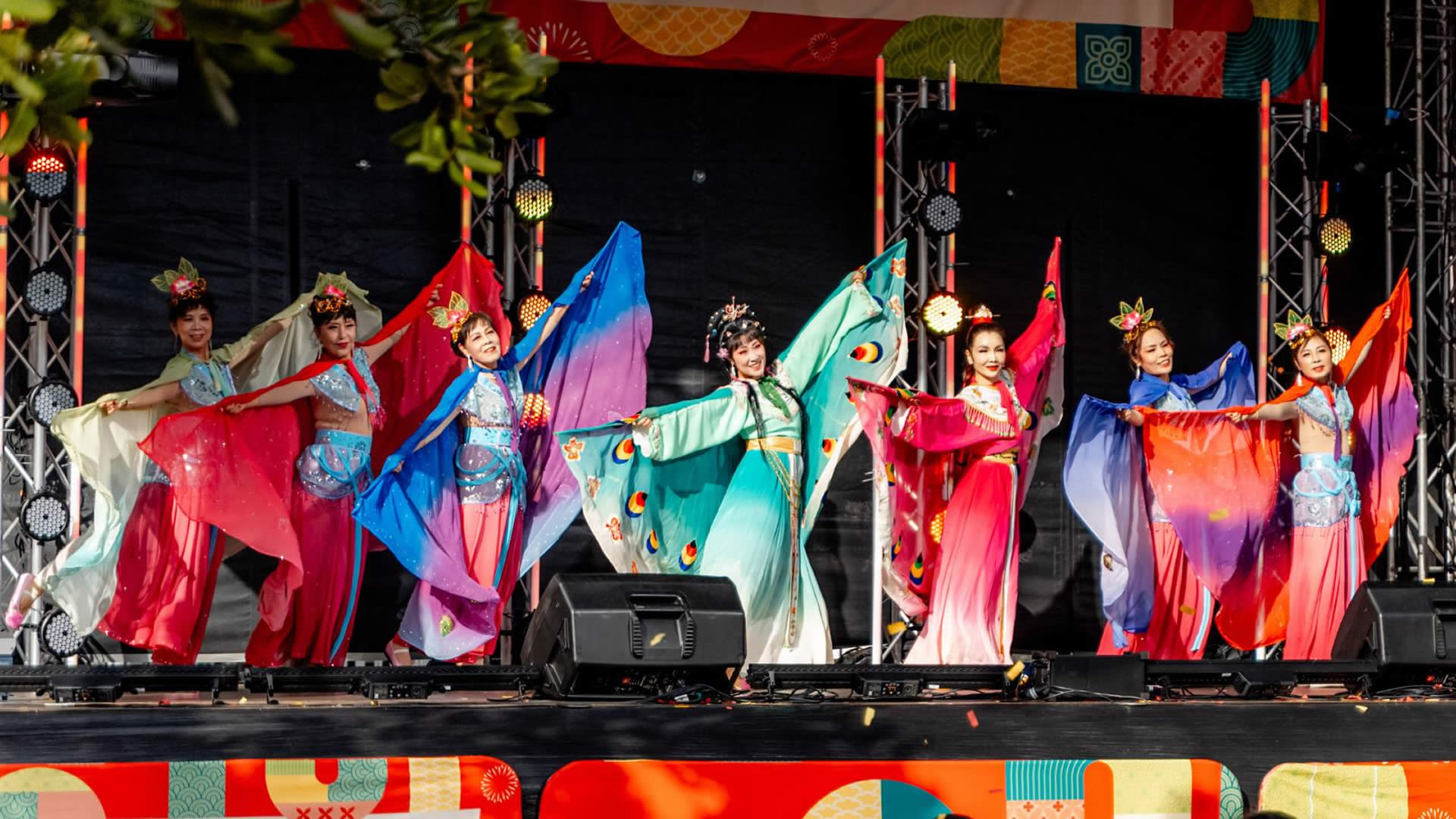
At Hurstville Plaza, the stage becomes a focal point. Dance troupes, musicians, and community groups move through performances that reflect the area’s layered identity. Traditional melodies give way to contemporary interpretations, then back again. The crowd responds not with roaring applause but with attentive stillness, phones lowered, eyes forward.
Throughout the afternoon, the Year of the Horse is referenced subtly – in costume details, in spoken introductions, in the steady forward momentum of the program itself. There is no single moment of climax. Instead, the day unfolds like a long conversation, each performance adding a new voice.
Art in Motion Before the Festival
In the weeks leading up to the celebration, another kind of gathering takes place inside Westfield Hurstville. Shoppers pause as artist Bryan Mew paints Kumquat Blessings & The Fire Horse live, brushstrokes slowly revealing colour and form. The mural, created for the Year of the Horse, is less about immediacy than accumulation – layers built patiently, observed over days.
By the time it appears at the festival, the artwork carries with it the memory of its making. People recognise it, point it out, explain it to children. It becomes a quiet anchor amid the movement of the day.
Dusk and the Long Evening
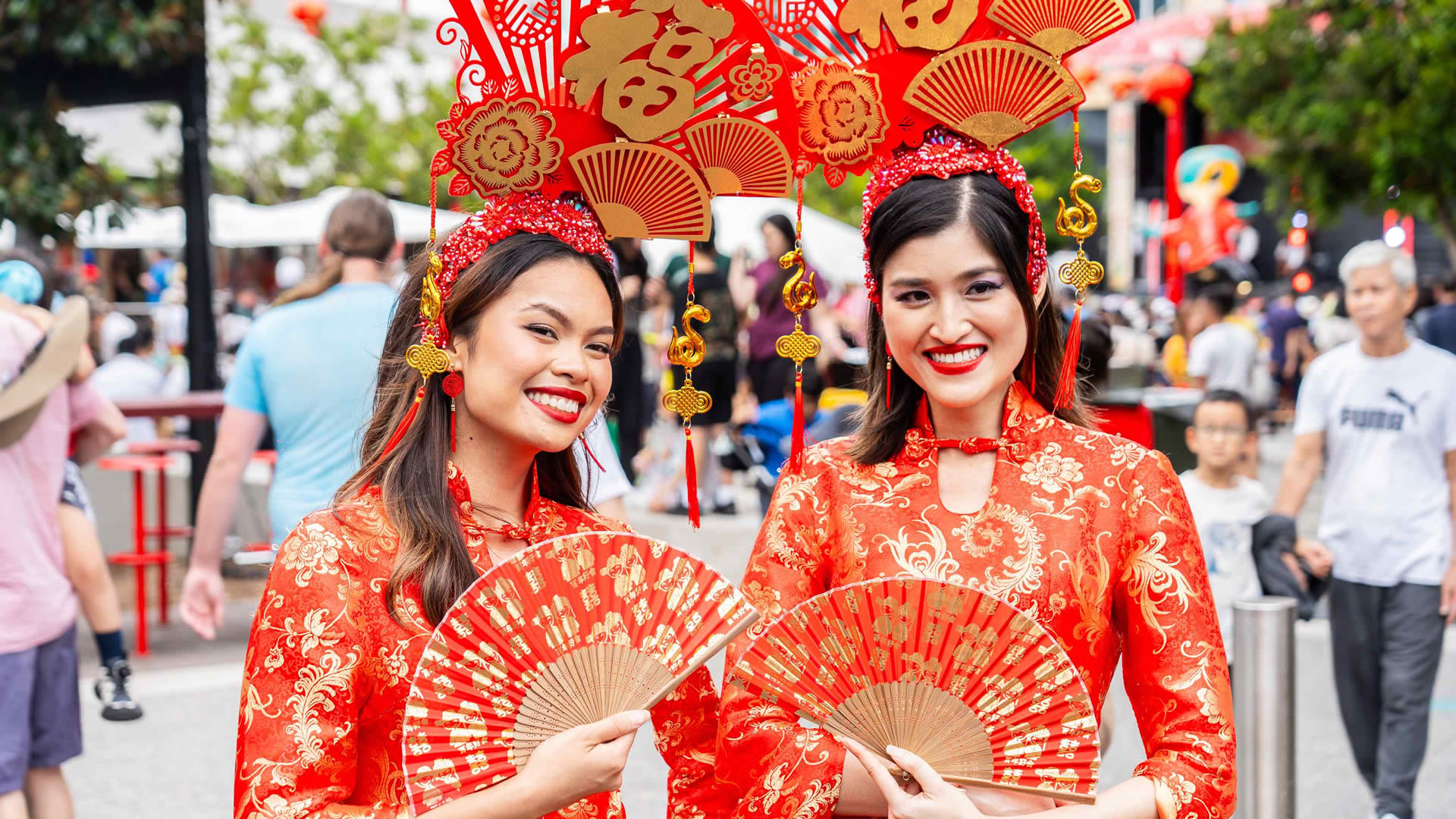
As the sun lowers, the festival shifts again. Lights come on, music deepens, and the crowd swells toward evening. The Year of the Horse feels most present now, in the way people continue moving even as fatigue sets in. Dinner is eaten standing up, conversations stretch longer, and the plaza hums with an easy endurance.
There is no rush to leave. Some families stay until nightfall; others drift away, replaced by new arrivals. The streets hold the energy without strain, as if accustomed to carrying it.
A Night That Lingers
When the final performances end and stalls begin to pack down, Hurstville does not snap back to normal. The smell of food lingers, as does the sense of shared time. The Year of the Horse celebration leaves behind more than photographs; it reinforces a collective memory of being together in the open air, on familiar streets, with room for both tradition and change.
Walking away, past shuttered shops and quiet side streets, the echo of drums feels distant but intact. Hurstville returns to itself, carrying the day forward – steady, resilient, and already moving on.