
The Viking Hoards Of Scotland will arrive in Sydney in 2026 through the Galloway Hoard exhibition, revealing early medieval treasures and buried histories.
On the harbour edge at Darling Harbour, winter light will fall differently through the glass and stone of the Australian National Maritime Museum. It will spread in pale sheets across the waterfront, catching on passing ferries and dissolving into the surface of the water. Inside, visitors will move from the present into something far older, where time feels compressed and layered.
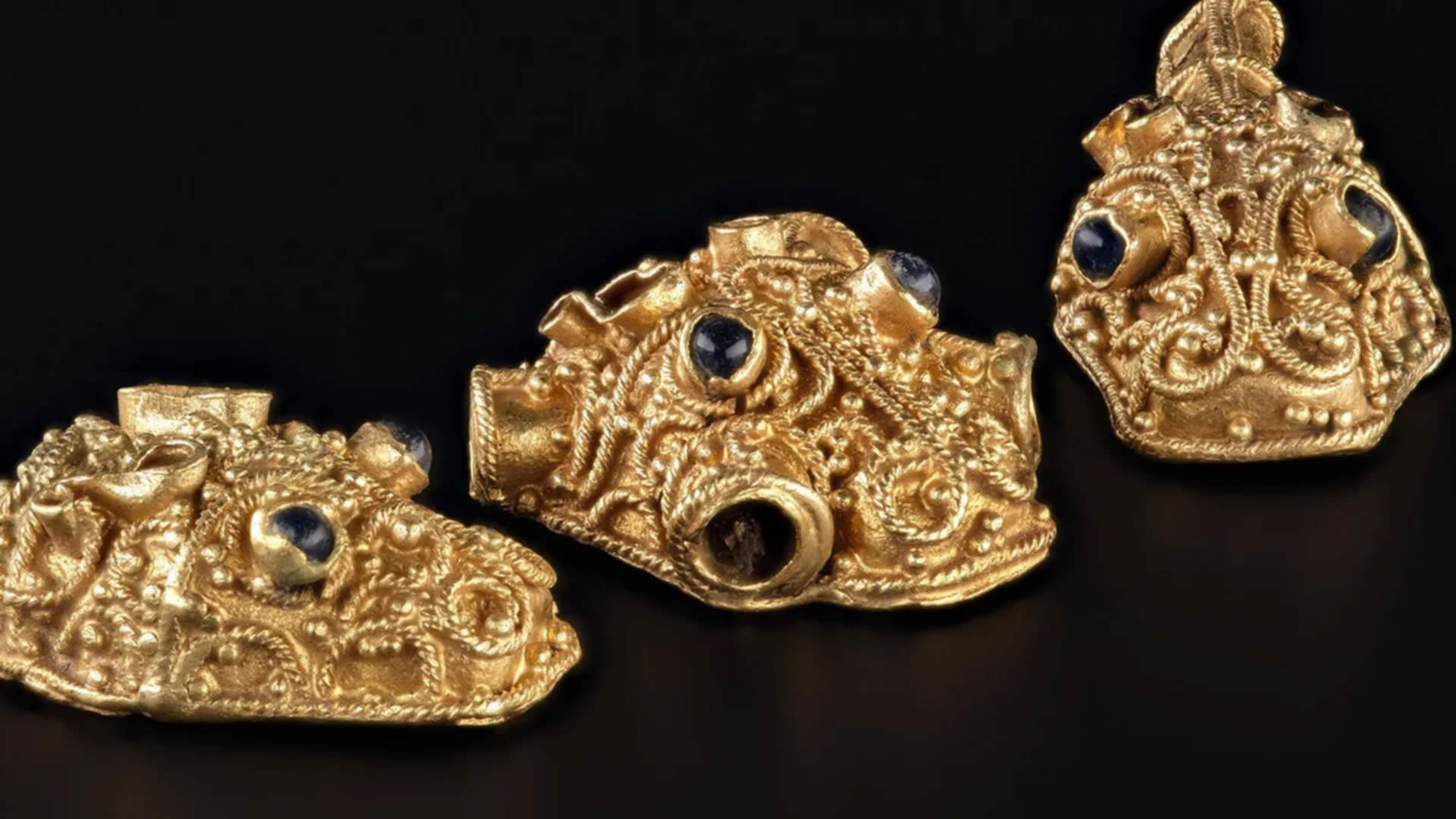
The Viking Hoards Of Scotland will arrive not as spectacle, but as a quiet unfolding – an exhibition built around buried things, careful recoveries, and the long patience of preservation. The Galloway Hoard, discovered in 2014 and buried around AD 900, will sit at its centre. Its objects will not simply be displayed; they will be held in a way that suggests how easily they might have remained lost.
There is something subdued about gold that has been underground for over a thousand years. It does not shine in the way modern objects do. It carries instead a softened light, as though it has learned to exist without being seen.
The Viking Hoards Of Scotland And The Weight Of Buried Time
The gallery space will open slowly, with objects arranged in a way that resists urgency. Visitors will not be guided toward a single narrative. Instead, they will move among fragments – silver arm rings, gold objects, and intricate metalwork that once travelled across early medieval worlds stretching from Britain and Ireland to mainland Europe and Central Asia.
The Viking Hoards Of Scotland will be presented as a moment of convergence rather than conquest. The Galloway Hoard itself, weighing over five kilograms of silver, gold and organic materials, will suggest not only wealth, but connection. Its contents will reflect a world in motion, where objects moved as easily as ideas, and where boundaries were still forming.
Some pieces will appear almost domestic in scale. Others will feel ceremonial, their purpose uncertain. The uncertainty is part of their presence. Nothing in the hoard will arrive with complete explanation attached.
And yet, even without certainty, patterns will begin to emerge.
A sense of careful burial. A sense of intention. A sense that what was placed underground was meant to be recovered by someone, at some time, in a world that no longer exists.
The Viking Hoards Of Scotland And Objects That Remember
Moving deeper into the exhibition, the Viking Hoards Of Scotland will reveal its quieter details.
Textiles preserved in extraordinary condition will sit alongside metalwork, their survival shaped by the way the hoard was buried. Silk threads, fragile and unexpectedly intact, will hint at contact between distant cultures. These materials will not shout for attention. They will require it.
There will be a particular stillness in this section of the exhibition. Visitors will slow instinctively, as though acknowledging that these objects cannot be rushed.
Conservation processes will also be visible here – not as technical display, but as a form of translation. The careful work of archaeologists and researchers will be present in the arrangement, reminding viewers that what they see is not the hoard itself, but what has been patiently brought back into visibility.
The Viking Hoards Of Scotland will, in this sense, be as much about recovery as discovery.
What has been lost will remain partially unknowable. What has been found will remain carefully incomplete.
The Viking Hoards Of Scotland And A Landscape In Transition
The exhibition will also trace the world around the hoard – a landscape in flux during the early medieval period, when political identities across Scotland, England and Ireland were still forming.
Maps and contextual material will sit alongside the artefacts, but they will not dominate them. Instead, they will act as a quiet frame, suggesting movement rather than closure.
The Viking Hoards Of Scotland will resist the temptation to simplify this period. It will not present a single story of arrival or settlement. Instead, it will hold multiple possibilities at once – trade, migration, conflict, exchange.
The hoard itself will remain the anchor. Around it, history will feel less like a fixed narrative and more like a shifting terrain.
Visitors may find themselves pausing longer than expected in this section, not because of visual spectacle, but because of the way the objects seem to ask for slower attention. In a museum environment shaped by information, this slowing becomes its own kind of instruction.
The Viking Hoards Of Scotland And What Remains Unspoken
Toward the end of the exhibition, the Viking Hoards Of Scotland will turn toward absence.
Not everything buried with the hoard will have survived. Organic materials, though partially preserved, will still carry gaps. Entire contexts will remain missing. The identity of those who buried it will remain uncertain.
This absence will not feel like loss alone. It will feel structural – part of how the hoard continues to exist in the present.
There will be a quiet acknowledgement that archaeology often works with fragments, not wholes. That meaning is constructed through what remains, as much as what does not.
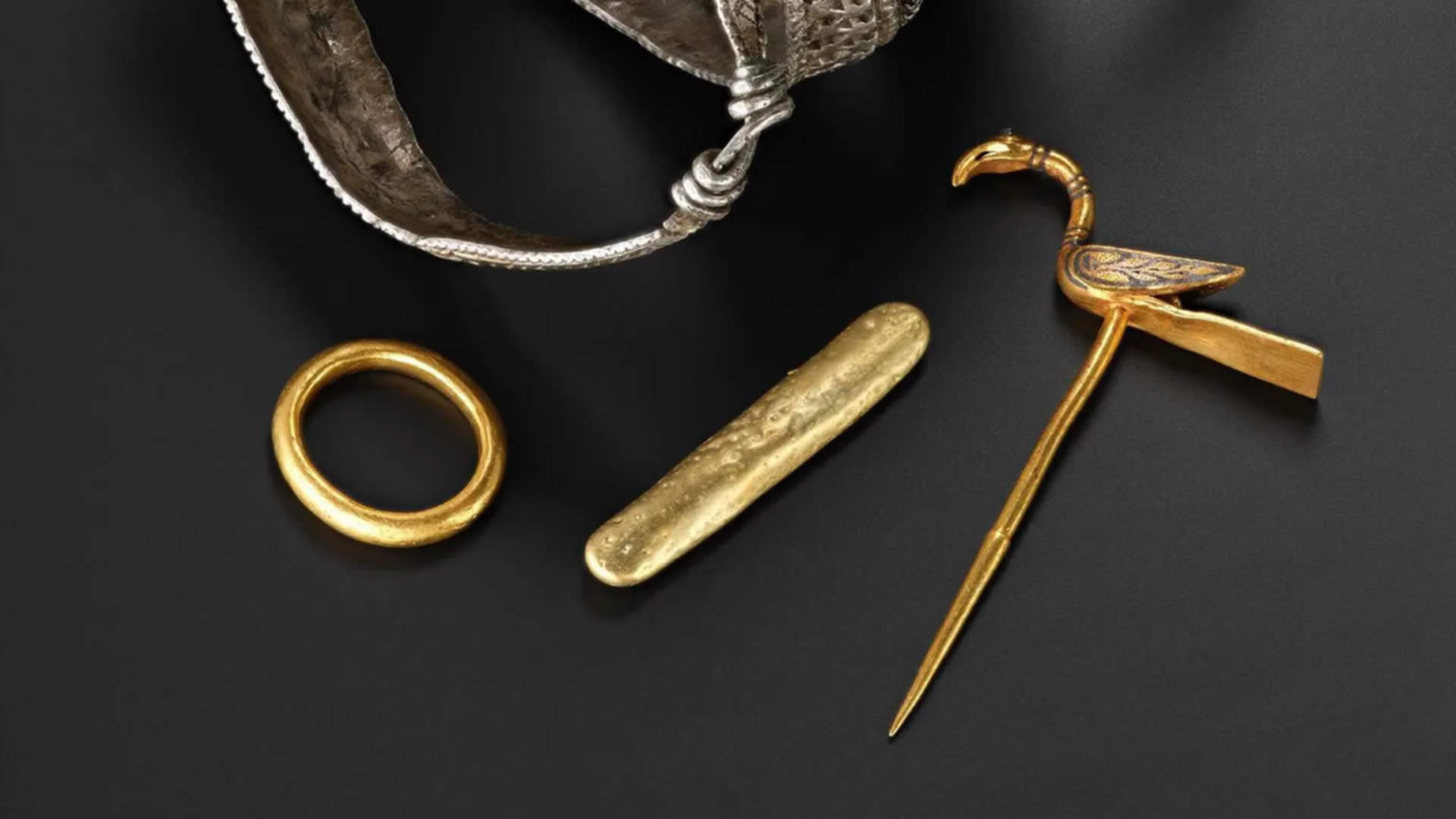
And yet, the objects themselves will resist fading into abstraction. A gold pin shaped with bird-like detail will hold its own presence. Silver forms, bent and worn, will still carry the memory of use. Even without full narrative, they will remain grounded in human action.
The Viking Hoards Of Scotland will leave much unresolved. That unresolved quality will be its strength.
Event Details
Exhibition: Treasures of the Viking Age – The Galloway Hoard (The Viking Hoards Of Scotland)
Dates: 28 May – 11 October 2026
Venue: Australian National Maritime Museum, Darling Harbour, Sydney NSW
Entry Fees:
Adult $35 | Concession $30 | Child $25 | Family $89
Galloway Hoard ticket (excludes vessels): Adult $25 | Child $15 | Concession $20 | Family $69
Infants & Members: Free
Official Link:
https://www.sea.museum/en/whats-on/exhibitions/treasures-of-the-viking-age-the-galloway-hoard